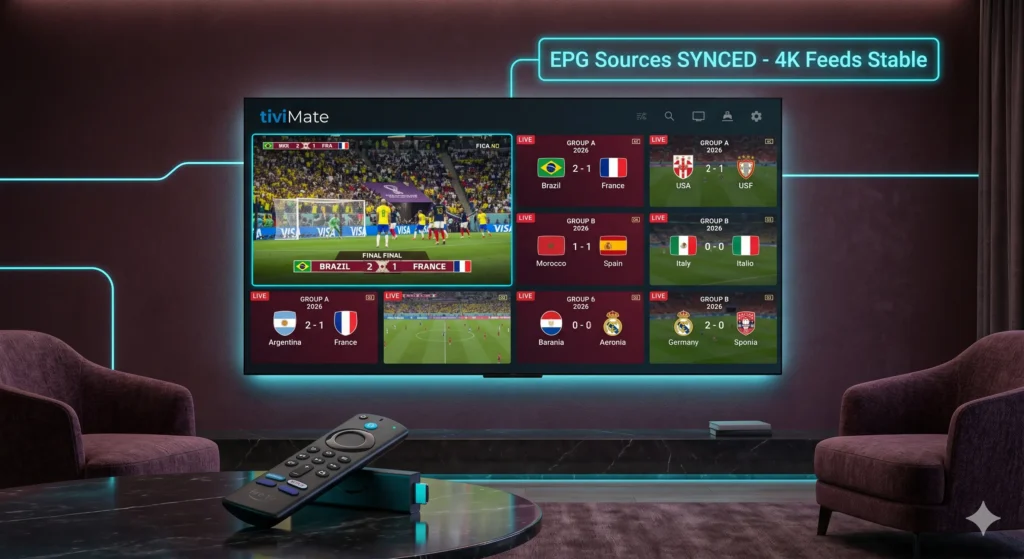
Finding the Best IPTV for World Cup 2026 is the ultimate goal for football fans who want to stream every single match in crystal-clear quality. The 2026 FIFA World Cup is the biggest edition in tournament history, with 48 teams, 104 matches, and three host nations: the United States, Canada, and Mexico. The tournament opens on 11 June 2026 and ends with the final on 19 July 2026, which means fans are preparing for more football, more simultaneous viewing windows, and more pressure on every streaming platform than any previous World Cup.
That scale is exactly why so many viewers are rethinking how they watch. Traditional cable packages can be expensive, rights vary by country, and travelling across three host nations for live matches is unrealistic for most fans. The real goal is simpler: find the Best IPTV for World Cup 2026 setup, pair it with the right device, and make sure your server infrastructure is ready before the opening match.
Don't let a frozen screen ruin the match.
Switch to the World's #1 Premium Server today.
Table of Contents
Why Server Infrastructure Matters for World Cup 2026
If you want the Best IPTV for World Cup 2026, the first thing to judge is not marketing. It is infrastructure. A stream can look perfect during a quiet weekday test and still collapse when a major group-stage clash, knockout match, or host-nation fixture sends traffic surging.
For football, the failure points are always the same:
- Slow channel startup.
- Sudden bitrate drops.
- Audio drifting out of sync.
- Freezing during peak tournament traffic.
- Long recovery times after a stall.
That is why the best streaming services invest in the boring parts of delivery: redundant origin feeds, smarter CDN routing, regional edge delivery, and resilient player apps. Even if a viewer never sees that architecture, they feel it immediately. A good platform starts fast, holds quality, and keeps the dreaded loading wheel off the screen when a move builds in the box.
The only metric that matters is whether you have an anti-freeze IPTV for football stream that stays solid under real event pressure.
The 4K UHD and 60fps Standard for Live Football Streaming
Football exposes weak compression faster than almost any other sport. The camera pans constantly, the ball moves quickly across the frame, and a poor stream turns grass into mush, crowds into noise, and the ball itself into a blur.
For that reason, the benchmark for anyone trying to watch World Cup 2026 live streaming on a large TV should be:
- True 1080p or 4K output: No upscaled low-bitrate feeds.
- Smooth 50/60fps motion: Essential for tracking fast-moving footballs cleanly.
- High bitrate preservation: To keep the grass and details sharp during fast camera pans.
- Stable decoding: Ensuring your device doesn’t overheat or stutter during long watch sessions.
This is especially important for the 2026 tournament because the event runs across three countries and a wide set of venues, with a longer, denser schedule than older editions. If you are watching several matches a day, the visual fatigue from poor motion handling adds up fast.
World Cup 2026 Streaming Requirements
| Feature | Premium Standard | Minimum Requirement |
| Resolution | True 4K UHD | 1080p HD |
| Frame Rate | 60 fps (Smooth Motion) | 30 fps |
| Internet Speed | 50 Mbps+ (Stable) | 25 Mbps |
| Recommended Codec | AV1 / HEVC | H.264 |
| Connection Type | Ethernet (Wired) | 5 GHz Wi-Fi |
Main Broadcasters and 4K Sports IPTV Servers Channels to Look For
The most important buying decision is regional rights. The right service in one country may not be the right one in another, so always start with the official broadcaster list for your market. FIFA maintains an Official Broadcasters page for World Cup 2026, and that should be your first checkpoint.
For major markets, the FIFA World Cup 2026 channels list includes:
- United States (English): FOX says all 104 matches can be streamed on FOX One and FOXSports.com, with matches broadcast on FOX and FS1.
- United States (Spanish): Telemundo holds the Spanish-language rights, with reporting stating 92 matches on Telemundo, 12 on Universo, and all 104 live on Peacock.
- United Kingdom: FIFA says BBC and ITV will share rights equally for the 2026 World Cup, including a shared final, with coverage across BBC channels and iPlayer, plus ITV1, ITV4, and ITVX.
A premium service carrying these channels must also have a flawless usability layer, ensuring reliable EPG schedule sync, correct match naming, and fast access to upcoming fixtures.
How to Stress-Test Your Setup Before Kick-Off
Do not wait until opening day to discover that your app stutters, your Wi‑Fi drops frames, or your device overheats. The World Cup opens on 11 June 2026, so your setup should be tested well in advance.
The Exact Test Sequence:
- Test During a Live Event: Use a high-traffic football match or major friendly as a stand-in to simulate real server strain.
- Compare Ethernet and Wi‑Fi: Wired connectivity still beats wireless consistency for high-bitrate 4K sports IPTV servers.
- Check Startup and Recovery: Switch between live channels to see how quickly the resolution stabilizes.
- Watch for 15 Minutes Continuously: Short tests hide problems. Real faults usually appear after several minutes of background network interaction.
- Reboot and Clear Cache: Before the tournament starts, force stop your player app, clear the cache, and restart your streaming stick.
The Best Hardware for World Cup Streaming
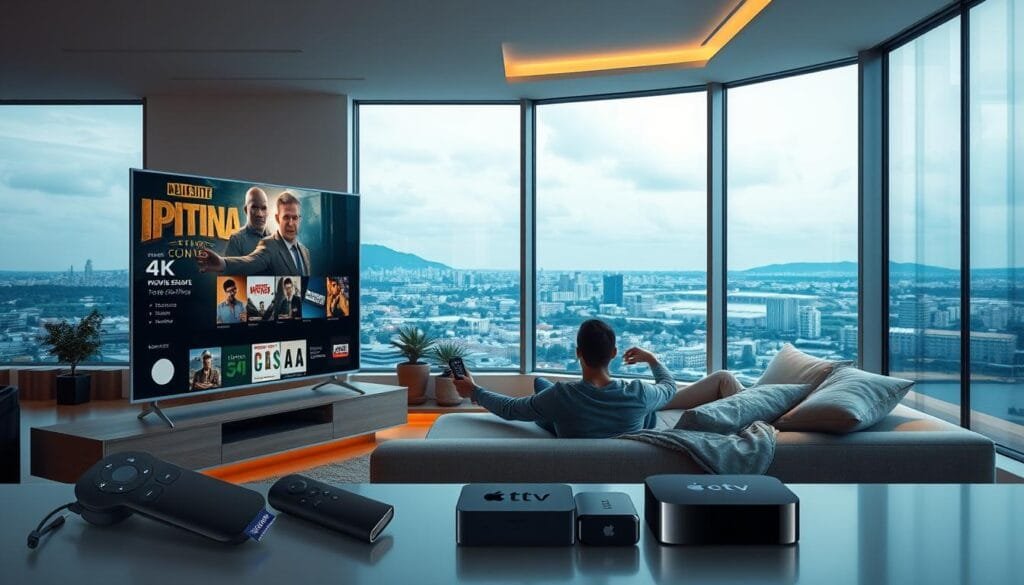
If your goal is a smooth, premium football experience, the device matters almost as much as the service:
- Amazon Fire TV Stick 4K Max (Best Value): One of the most practical options for many households because it combines strong app support and modern codec support (AV1) in a compact device.
- Apple TV 4K (Best Polished Experience): Excellent choice if you care about smooth menus, strong HDR handling, and a cleaner premium interface.
- Nvidia Shield Pro (Best Enthusiast Route): Perfect if you use several apps, want more control, or plan to watch long multi-view sessions every day of the tournament.
Conclusion: Securing the Best IPTV for World Cup 2026
The 2026 World Cup is too big to treat casually. With 48 teams, 104 matches, and a month-long run from 11 June to 19 July, this is the kind of tournament that rewards preparation. The safest path is to secure a legitimate service, test it during live football before kickoff, and make sure your device and network can actually deliver the quality you are paying for.
Do that properly, and you give yourself the best possible chance of watching every crucial moment in crisp 4K without panic, buffering, or last-minute scrambling.